Overview of Spencerian Handwriting PDFs
Spencerian PDFs compile theory, practice, and worksheets in one resource. The Complete Collection offers step‑by‑step lessons, 71 practice sheets, and printable guidelines. Free scans and PDFs are available online, such as the 2015 Reddit link and the 2018 IAMPETH copy book.
These PDFs aid print study, with searchable text and for examples.
Popular Spencerian PDF Resources
For enthusiasts and educators, several high‑quality PDFs are widely shared. The Complete Collection of Theory and Practical on BookCenter offers a single edition that blends lessons, worksheets, and practice pages. It includes 71 printable sheets that mirror Plate 2 of the New Spencerian Compendium, making it ideal for classroom use.
Reddit’s r/Handwriting community hosts a 2015 thread where user conservatur posted a full set of scanned copy books. The link https://www.iampeth.com/pdf/theory-spencerian-penmanship provides a PDF of the original theory book, useful for those who prefer a paper‑like experience.
For those who want to practice with guidelines, the SpencerianGuidelines repository on GitHub offers PDF templates that generate 2.5 mm, 52‑degree guidelines. These are handy for creating custom worksheets.
Another resource is the PageFlutter page that offers downloadable practice sheets compatible with the Spencerian System of Practical Penmanship. These sheets are designed for easy printing and can be combined with the Complete Collection for a comprehensive curriculum.
These PDFs are often distributed as searchable documents, allowing students to copy text, annotate, and use optical‑character‑recognition tools. Many educators recommend combining the Complete Collection with the GitHub guidelines to create a full curriculum that covers both theory and hands‑on practice.
Export PDFs to Word or Docs for editingnow
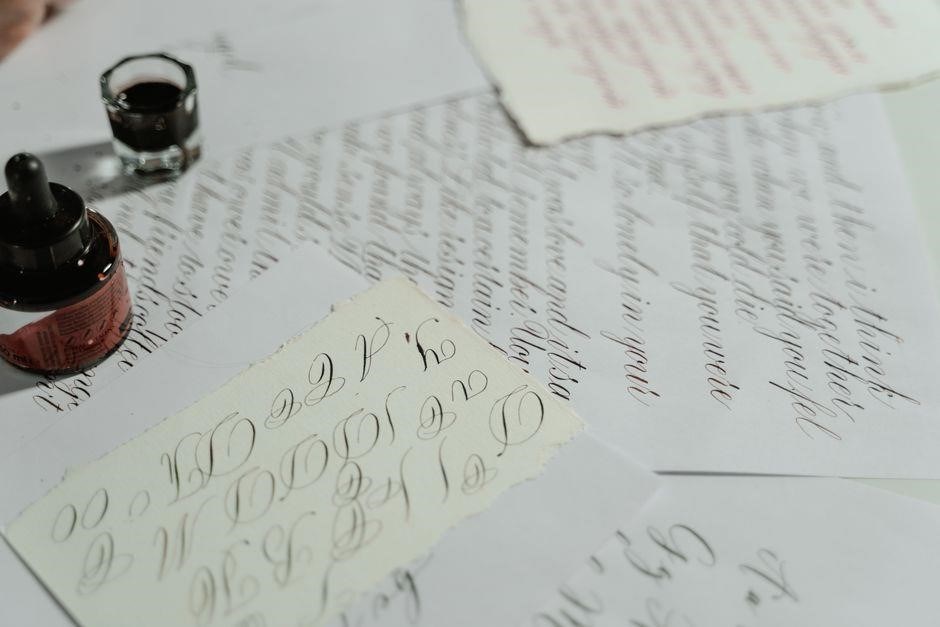
PDF Formats and File Types
When working with Spencerian handwriting resources, the most common file format is the standard PDF (Portable Document Format). PDFs preserve the original layout, fonts, and images, making them ideal for both digital review and high‑quality printing. Many collections, such as the Complete Collection of Theory and Practical, which can be opened with free readers like Adobe Acrobat Reader or Foxit Reader.
In addition to the standard PDF, some authors provide alternative formats to accommodate different workflows. Text files (.txt) allow users to copy and paste content into word processors for custom formatting. Image files (.jpg or .png) are often embedded within PDFs or offered separately for those who want to overlay guidelines on a camera‑taken photo of a handwritten page.
For educators who need to create interactive worksheets, PDF/A is a variant that ensures long‑term preservation and compliance with archival standards. PDF/A files embed all fonts and use fixed color profiles, which is useful when distributing materials that must remain unchanged over time.
Some resources also offer PDF/X, a format optimized for printing. PDF/X files include bleed marks and color space information, which helps print shops produce accurate reproductions of Spencerian practice sheets. When downloading a PDF/X, users should confirm that their printer supports the required color profile.
Finally, for advanced users, a PDF/UA (Universal Accessibility) version may be available. PDF/UA embeds tags and alternative text, making the document navigable for screen readers and compliant with accessibility standards. This is particularly valuable for institutions that must meet ADA requirements.
Editing and Annotating Spencerian PDFs
Spencerian PDFs can be edited with a variety of free and commercial tools. Adobe Acrobat Pro DC offers a full set of annotation tools—highlight, underline, strikethrough, and sticky notes—allowing users to mark up practice sheets and the free Acrobat Reader also supports basic annotation, which is sufficient for quick notes.
For those who prefer open‑source solutions, PDF-XChange Editor and LibreOffice Draw provide robust editing capabilities. PDF-XChange Editor lets you insert text boxes, change font size, and even replace entire lines of handwriting with typed equivalents. LibreOffice Draw opens the PDF as a vector graphic, enabling precise placement of new strokes or correction of existing ones.
When working with scanned practice sheets, many users employ image editing software such as GIMP or Photoshop to clean up background noise before re‑importing the file into a PDF editor. This step improves the clarity of guidelines and makes the document easier to annotate.
Another popular method is to convert the PDF to a Word document using tools like Smallpdf or Zamzar. Once in Word, users can type directly over the scanned images, adjust spacing, and then export back to PDF. This workflow is especially useful for creating custom worksheets that combine original Spencerian practice with personalized notes.
Finally, for collaborative projects, cloud‑based platforms like Google Drive or Microsoft OneDrive allow multiple users to comment on the same PDF simultaneously. By sharing the document link and setting appropriate permissions, educators and students can review each other’s annotations in real time, fostering an interactive learning environment.
Accessibility and Printing Considerations
When preparing Spencerian PDFs for learners, accessibility should be a priority. Begin by tagging the document with a proper PDF/UA structure: add a title, language, and author metadata. Use text tags for all instructional content and image tags for scanned practice sheets, ensuring each image has descriptive alt text such as “Spencerian practice sheet with guidelines.” Screen readers rely on this hierarchy to read the document in logical order. Include landmarks (header, footer, navigation) and table of contents bookmarks for quick navigation. For color‑blind users, provide high‑contrast color schemes and avoid using color alone to convey meaning. Enable reflow by setting the PDF to text reflow mode, allowing the text to adapt to different screen sizes. Add annotations in a separate layer so that learners can add notes without altering the original content. When printing, choose a standard paper size (e.g., A4 or Letter) and set margins to at least 0.5 inches to preserve the guidelines. Use a resolution of 300 dpi for crisp lines and embed all fonts to prevent substitution. For archival purposes, export the final file as PDF/A‑1b to ensure long‑term preservation. Finally, test the PDF with Adobe Acrobat’s Accessibility Checker and a screen reader like NVDA or VoiceOver to confirm compliance before distribution.
Embed a bookmark hierarchy that mirrors the lesson structure, letting learners jump to specific practice sheets. Export as PDF/A‑2b to enhance accessibility and compress images to keep file size small while preserving line clarity all.!!

Legal and Copyright Issues
Spencerian works pre‑1900 are public domain, yet many PDFs bundle modern commentary or scanned editions that remain copyrighted. Always check the source’s license; use Creative Commons or obtain permission for non‑free content. For commercial use, secure rights or rely on the original public‑domain text. Seek legal advice before sharing.!!
Official Spencerian Handwriting Collection
The Official Spencerian Handwriting Collection is a unified digital archive that brings together the foundational texts of Platt Rogers Spencer—1890’s “Spencerian Penmanship,” 1892’s “Spencerian Practical Penmanship,” and 1901’s “Spencerian System of Practical Penmanship”—into a single, searchable PDF library. Each volume has been scanned at high resolution, preserving the fine line work and instructional diagrams essential to teaching the elegant cursive style that dominated 19th‑century American business correspondence. The PDFs are available in both standard and large‑print versions, allowing educators and students to adjust line spacing for optimal legibility. Supplementary materials such as practice sheets, teacher’s guides, and historical essays contextualize Spencer’s pedagogical approach. All documents are licensed under a Creative Commons Attribution‑ShareAlike 4.0 International license, permitting free redistribution and adaptation provided that appropriate credit is given and derivative works share the same terms. Because the original texts are in the public domain, the collection’s primary legal consideration is the licensing of the digitized images, which the Creative Commons license ensures remain freely available for educational purposes. The collection is regularly updated to include newly discovered manuscripts and correct OCR errors that may have arisen during digitization. By offering a single, authoritative source for Spencerian materials, the collection eliminates fragmented searches across multiple archives, streamlining research and instruction. The design emphasizes user‑friendly navigation with a searchable index that allows quick access to specific lessons, letter forms, and practice exercises. The built‑in annotation tool enables users to highlight passages, add notes, and share insights with peers. Users can export annotations to PDF for sharing with classmates and colleagues and peers.!!. Overall, the Official Spencerian Handwriting Collection serves as an indispensable resource for historians, educators, and enthusiasts who wish to preserve and disseminate the legacy of one of America’s most influential penmanship systems.
PDF vs. Text vs. Images
When exploring Spencerian resources, the format chosen—PDF, plain text, or image—directly influences usability, accessibility, and fidelity to the original manuscripts. PDFs preserve the layout, line‑spacing, and calligraphic nuances of Spencer’s hand. They allow zooming to 400 % without loss of detail, which is essential for studying the subtle variations in letterforms such as the “c” or the “t” that differentiate a novice from a master. PDFs also support embedded hyperlinks to the index, enabling instant navigation to the 71 practice sheets or the 1892 “Spencerian Practical Penmanship” lessons. In contrast, plain‑text files strip away all visual cues, leaving only the written content. While this format is lightweight and searchable, it eliminates the instructional diagrams that illustrate the correct stroke order and pressure. Images, typically JPEG or PNG scans, provide a faithful reproduction of the page but lack the structural metadata of a PDF. They cannot be easily annotated or searched, and scaling often introduces pixelation, obscuring fine strokes. For educators, the PDF format offers the best balance: it retains the aesthetic integrity of Spencer’s script, supports annotations for collaborative study, and includes accessibility features such as tagged text for screen readers. Text files are useful for quick keyword searches or when bandwidth is limited, but they require manual re‑formatting to re‑introduce line breaks and spacing. Image files serve as archival backups or for high‑resolution printing, yet they are less interactive. Ultimately, the choice depends on the user’s goal—whether to preserve the visual artistry, facilitate rapid search, or enable collaborative annotation. All resources free for all!!
Using PDF Editors for Practice
Spencerian practice sheets are most effective when combined with the interactive tools of modern PDF editors. The first step is to open the downloaded PDF—such as the 71‑sheet workbook from the official collection—using a program that supports annotation layers. Adobe Acrobat DC, Foxit PhantomPDF, and PDF‑XChange Editor all provide a “Comment” mode that lets you draw freehand strokes directly on the guidelines. By selecting the pencil tool and matching the pen tip width to the original Spencerian nib (typically 0.5 mm to 1.0 mm), you can trace the model letters and immediately see how your strokes compare. The “Text Box” feature is invaluable for adding short notes beside each letter, for example, “slight over‑stroke on the ‘g’” or “improve tail curvature.” Many editors also allow you to import a custom image of your own handwriting and overlay it on the template; this is useful for side‑by‑side comparison. If you prefer a more structured approach, the “Form” tools let you create a grid of text fields that automatically lock the spacing, ensuring consistent letter placement. For collaborative learning, the “Share” function can export the annotated PDF to a shared drive or email, preserving all layers. Finally, most editors support exporting the annotated pages as high‑resolution PNGs, which can be printed on tracing paper for practice. By leveraging these features, students can transform static worksheets into dynamic, feedback‑rich learning tools, accelerating mastery of Spencerian script.
Students often save annotated pages as PDFs, then use cloud services to share them with teachers, enabling instant feedback loops that refine stroke consistency and improve daily legibility.
Printing Guidelines and Paper Sizes
When printing Spencerian practice sheets, choose paper that mimics the texture of historical writing paper. A 70 lb or 80 lb white or ivory cardstock provides enough stiffness for a nib without feathering. For the most authentic feel, use a slightly heavier weight, such as 100 lb, which resists ink bleed and allows the fine lines of Spencerian strokes to remain crisp. The standard US letter (8.5×11 in) works well for most worksheets, but the original Spencerian compendium was printed on A4 (210×297 mm). If you prefer the European format, use your printer to A4 and ensure the PDF’s margins are set to 1.5 cm on all sides; this gives ample room for the 0.5‑mm guideline grid.
Margins are critical: a 0.75‑in margin on the left and right keeps the guidelines centered, while a 0.5‑in top margin allows space for a header. Bottom margins should be slightly larger (0.75 in) to accommodate any handwritten notes. When scaling, use “Actual Size” or “100 %” to avoid distortion of the 0.5‑mm lines. Many PDF readers offer a “Fit to Page” option; disable it for precise practice. If you print multiple copies on one sheet, use the “Multiple” feature and set the layout to 2 by 2, ensuring each copy retains the same scale.
For digital practice, export the PDF as a high‑res (300 dpi)PNGand print on tracing paper. Tracing paper’s translucent surface lets you see the original guidelines beneath your own strokes, facilitating real‑time correction Finally, always test a single sheet first: check ink spread, line sharpness, and whether the nib’s tip width matches the printed grid. Adjust printer settings—especially ink density and paper type—until the reproduced lines match the original 0.5‑mm spacing.
Accessibility Features in PDFs
Spencerian PDFs can be made fully accessible by adding proper tags, reading order, and alt text. Use PDF/UA compliance to ensure screen readers interpret the document’s structure. Begin with a Title and Author metadata. Include a Table of Contents that links to each lesson, so users can jump directly to the practice sheet they need.
- Use Tagged Text for all instructional paragraphs, so the reading order follows the logical flow.
- Embed Alt Text for every image or diagram. For example, a guideline grid image should read “Spencerian guideline grid, 0.5 mm spacing.”
- Provide Keyboard Shortcuts for navigation, such as
Ctrl+Shift+Nto jump to the next page. - Include Language Tags if the PDF contains multiple languages, ensuring the reader switches to the correct voice.
- Use High Contrast color schemes for the text and background to aid users with visual impairments.
- Offer a Text‑Only Version of the PDF, stripping images while preserving all instructional content.

Testing tools like Adobe Acrobat’s Accessibility Checker or the NVDA screen reader can confirm compliance. By following these guidelines, Spencerian PDFs become inclusive resources for learners of all abilities.
For users who prefer audio guidance, many PDFs include a narration track. The narration follows the same reading order, allowing learners to hear the correct stroke sequence while they practice. This approach enhances retention and accessibility.
Copyright Status of Spencerian Materials
Spencerian materials, originally authored by Platt Rogers Spencer in the late 19th century, are in the public domain in the United States. The core texts, such as “The Spencerian System of Practical Penmanship,” were first published in 1879, well beyond the 70‑year post‑mortem threshold that governs copyright in the U.S. Consequently, any digitized copy of the original work can be freely reproduced, distributed, and adapted without licensing fees.
However, modern editions that incorporate new editorial commentary, high‑resolution scans, or supplemental practice sheets may be subject to copyright. Publishers who re‑publish the original content with added illustrations, annotations, or formatting changes typically hold a new copyright in those derivative works. The copyright status of such editions depends on the jurisdiction: in the U.S., the new material is protected for 95 years from publication or 120 years from creation, whichever is shorter.
- Digital scans of the original 1879 text are public domain, but the PDF files themselves may carry a license that restricts commercial use.
- Practice sheets added by third‑party authors are protected if they contain original artistic expression; the underlying Spencerian script remains public domain.
- When using a PDF that includes both public domain text and copyrighted images, the user must comply with the license attached to the PDF, which may require attribution or prohibit redistribution.
To avoid infringement, it is advisable to verify the source of each PDF. If the file is hosted on a reputable public‑domain archive (e.g., Project Gutenberg, Internet Archive), the content is likely free to use. Conversely, PDFs from commercial vendors often come with restrictive terms. Always check the “Copyright” or “License” section of the PDF metadata before incorporating it into a project.
For educational purposes, many institutions use the public‑domain text under the “Fair Use” doctrine, especially when the material is transformed, such as adding annotations or converting it into interactive learning modules. Nonetheless, the safest approach is to source the text directly from a public‑domain repository and create your own practice sheets, ensuring full control over the copyright status of the final product.
When working with Spencerian PDFs, it is essential to respect the distinction between public‑domain text and copyrighted images or annotations. Many free PDFs include high‑resolution scans that are themselves copyrighted. Users should verify the license of each image, and if necessary, replace it with a public‑domain alternative or remove it entirely.
These precautions keep Spencerian works intact for learners.
Following these rules, can skillfully practice Spencerian script respecting legal boundaries!