

Photosynthesis and cellular respiration are fundamental biological processes‚ intricately linked in the energy flow within ecosystems‚ as illustrated in various study guides.
These processes‚ often contrasted using Venn diagrams‚ demonstrate how organisms capture and utilize energy for life’s functions‚ impacting ocean climate interactions.

Importance of These Processes
Photosynthesis and cellular respiration are cornerstones of life on Earth‚ vital for sustaining ecosystems and all living organisms. Photosynthesis‚ occurring within chloroplasts‚ captures light energy to create glucose‚ fueling plant growth and releasing oxygen – a byproduct essential for aerobic respiration.
Conversely‚ cellular respiration breaks down glucose‚ releasing energy for cellular activities. This interdependence highlights their significance; plants produce what animals need‚ and animals release what plants utilize. Understanding these processes is crucial‚ as they influence global carbon and oxygen cycles‚ impacting climate and environmental stability.
Studying these processes‚ often through anchor charts and posters‚ reveals their role in energy transfer and metabolic pathways‚ demonstrating the delicate balance within biological systems.
Overview of Energy Flow in Living Systems
Energy flow in living systems begins with the sun‚ captured by producers – plants and algae – through photosynthesis. This process converts light energy into chemical energy stored in glucose. This stored energy then moves through ecosystems via food chains and food webs.
Consumers obtain energy by consuming producers or other consumers‚ utilizing cellular respiration to release the chemical energy from food. This energy fuels life processes like growth‚ movement‚ and reproduction. A key aspect is that energy transfer isn’t perfectly efficient; some energy is lost as heat at each trophic level.
Therefore‚ ecosystems require a constant input of energy from the sun. Studying these flows‚ often visualized with diagrams‚ emphasizes the interconnectedness of life and the importance of these core processes.
Photosynthesis: Capturing Light Energy
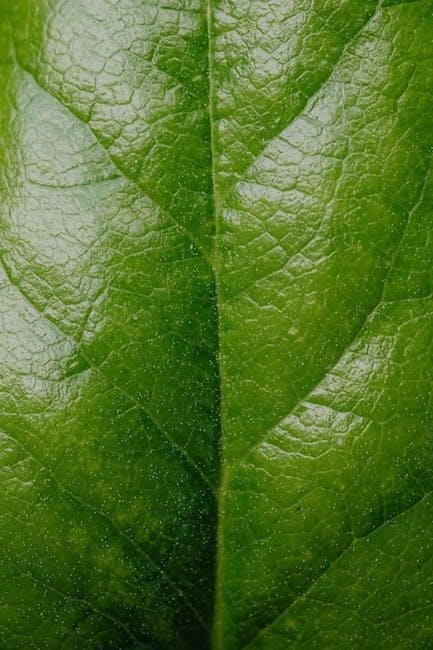
Photosynthesis transforms light energy into chemical energy‚ occurring within cells‚ specifically in chloroplasts containing chlorophyll‚ enabling plant growth and glucose production.
Chloroplasts: The Site of Photosynthesis
Chloroplasts are the organelles within plant cells where photosynthesis takes place. These structures are characterized by their internal compartments‚ including thylakoids arranged in stacks called grana‚ and the stroma‚ a fluid-filled space surrounding the thylakoids.
Within the thylakoid membranes reside pigments like chlorophyll‚ crucial for capturing light energy. This captured light initiates the process of converting carbon dioxide and water into glucose and oxygen. The chloroplast’s unique structure maximizes the efficiency of light absorption and subsequent energy conversion.
Essentially‚ the chloroplast acts as a miniature solar panel‚ harnessing the sun’s energy to fuel the creation of sugars that plants use for growth and metabolism. Understanding the chloroplast’s anatomy is key to grasping the mechanics of photosynthesis.
Pigments Involved in Photosynthesis
Pigments are essential molecules that capture specific wavelengths of light energy‚ driving the process of photosynthesis. Chlorophyll‚ the primary pigment‚ absorbs red and blue light most effectively‚ reflecting green light – hence the green color of plants; Different types of chlorophyll exist‚ each with slightly varying absorption spectra.
However‚ accessory pigments also play a vital role. These pigments‚ such as carotenoids and phycobilins‚ broaden the range of light wavelengths that can be used for photosynthesis. They absorb light in regions where chlorophyll absorption is weak‚ transferring that energy to chlorophyll for use in the light-dependent reactions.
This expanded light absorption capability allows plants to thrive in diverse light conditions‚ maximizing photosynthetic efficiency. The interplay between these pigments is crucial for optimal energy capture.
Chlorophyll and its Role
Chlorophyll is the defining pigment in photosynthesis‚ residing within the chloroplasts of plant cells. Its molecular structure features a magnesium ion at its center‚ crucial for capturing light energy. Chlorophyll primarily absorbs red and blue light wavelengths‚ reflecting green light‚ which explains why plants appear green to our eyes.
Upon absorbing light‚ chlorophyll becomes energized‚ initiating the light-dependent reactions. This energy drives the splitting of water molecules‚ releasing oxygen as a byproduct and providing electrons for the electron transport chain. Different forms of chlorophyll‚ like chlorophyll a and b‚ exhibit slight variations in their absorption spectra‚ optimizing light capture.
Essentially‚ chlorophyll acts as the primary transducer‚ converting light energy into chemical energy.
Accessory Pigments

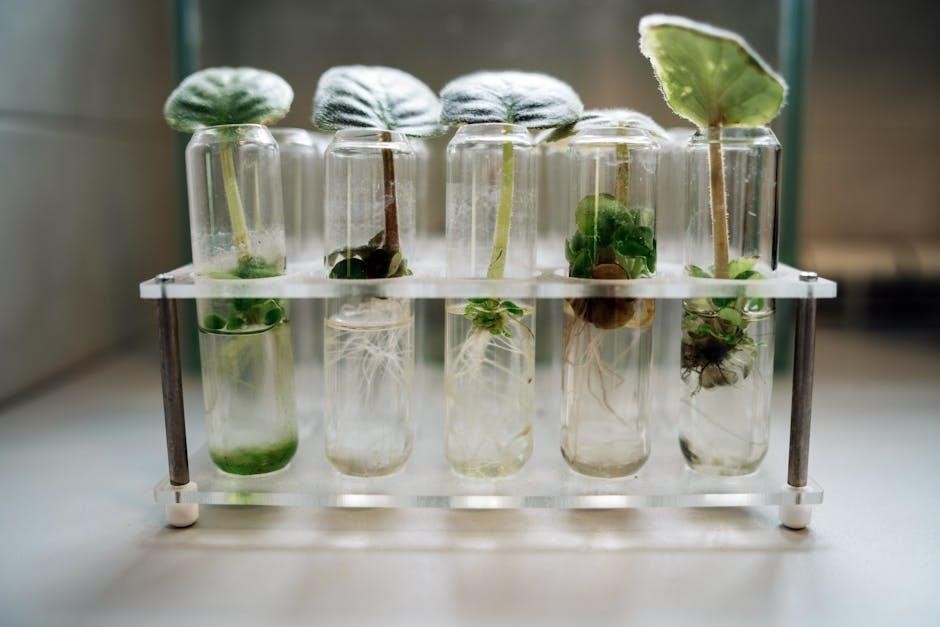
Accessory pigments broaden the spectrum of light that plants can utilize for photosynthesis‚ complementing chlorophyll’s absorption capabilities. These pigments‚ including carotenoids (like beta-carotene) and xanthophylls‚ absorb light wavelengths that chlorophyll misses‚ such as blue-green and violet light.
Carotenoids also play a protective role‚ dissipating excess light energy that could damage chlorophyll‚ acting as antioxidants. Xanthophylls are involved in photoprotection‚ helping to regulate light harvesting and prevent photoinhibition. They contribute to the vibrant autumn colors in leaves as chlorophyll breaks down.
By transferring absorbed energy to chlorophyll‚ accessory pigments enhance the overall efficiency of photosynthesis‚ especially in varying light conditions.
The Two Stages of Photosynthesis
Photosynthesis unfolds in two main stages: the light-dependent reactions and the light-independent reactions (Calvin Cycle). The light-dependent reactions occur in the thylakoid membranes of chloroplasts‚ capturing light energy to produce ATP and NADPH. Water molecules are split‚ releasing oxygen as a byproduct.
Subsequently‚ the light-independent reactions‚ or Calvin Cycle‚ take place in the stroma. This cycle utilizes the ATP and NADPH generated during the light-dependent reactions to convert carbon dioxide into glucose‚ a sugar molecule. This process‚ often summarized in equation form‚ demonstrates how light energy is transformed into chemical energy.
Understanding both stages is crucial for a comprehensive study of photosynthesis.
Light-Dependent Reactions
Light-dependent reactions initiate photosynthesis by harnessing light energy. This occurs within the thylakoid membranes inside chloroplasts‚ utilizing pigments like chlorophyll. Light energy excites electrons in chlorophyll‚ initiating an electron transport chain.
Water molecules are split (photolysis)‚ providing electrons to replenish chlorophyll and releasing oxygen as a byproduct. As electrons move down the transport chain‚ energy is released‚ driving the pumping of protons (H+) into the thylakoid space‚ creating a concentration gradient.
This gradient powers ATP synthase‚ generating ATP through chemiosmosis. Simultaneously‚ electrons combine with NADP+ and protons to form NADPH. Both ATP and NADPH are crucial for the subsequent light-independent reactions.
Light-Independent Reactions (Calvin Cycle)
Light-independent reactions‚ also known as the Calvin Cycle‚ utilize the ATP and NADPH generated during the light-dependent reactions. This cycle occurs in the stroma of the chloroplasts and doesn’t directly require light‚ but relies on its products.
The cycle begins with carbon fixation‚ where CO2 combines with RuBP‚ a five-carbon molecule‚ catalyzed by the enzyme RuBisCO. This unstable six-carbon compound immediately breaks down into two molecules of 3-PGA.
ATP and NADPH are then used to convert 3-PGA into G3P‚ a three-carbon sugar. Some G3P is used to create glucose and other organic molecules‚ while the rest regenerates RuBP‚ allowing the cycle to continue. The overall process converts inorganic CO2 into organic sugars.
Factors Affecting Photosynthesis
Several environmental factors significantly influence the rate of photosynthesis. Light intensity is crucial; as light increases‚ the rate rises until a saturation point is reached‚ beyond which it plateaus.
Temperature also plays a vital role‚ with optimal temperatures varying by species. Enzymes involved in photosynthesis have temperature sensitivities‚ and extreme temperatures can denature them‚ reducing efficiency.
Water availability is another key factor. Water stress causes stomata to close‚ limiting CO2 intake‚ and directly impacting the Calvin cycle. Studies on Cladonia species demonstrate how hydration affects photosynthetic rates.
Understanding these factors is essential for optimizing plant growth and productivity‚ as highlighted in comprehensive study guides.
Light Intensity
Light intensity directly correlates with the rate of photosynthesis‚ up to a certain point. As light energy increases‚ more photons are available to excite chlorophyll molecules‚ driving the light-dependent reactions. This leads to a higher production of ATP and NADPH‚ fueling the Calvin cycle.
However‚ this relationship isn’t linear. Beyond an optimal intensity‚ further increases don’t significantly boost photosynthesis; this is known as light saturation.
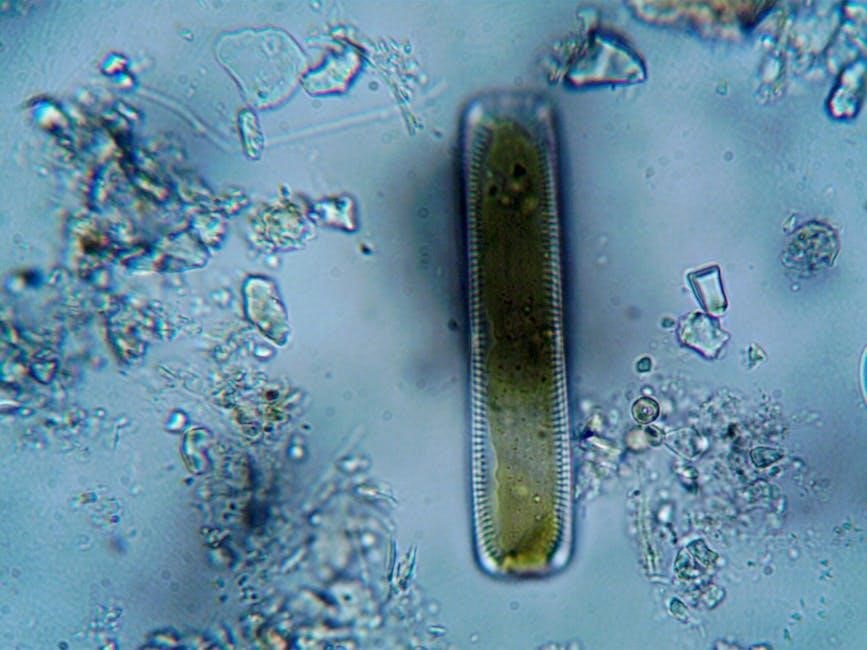
Excessive light can even damage the photosynthetic apparatus‚ a phenomenon called photoinhibition. Study guides emphasize understanding this balance – insufficient light limits production‚ while too much can be detrimental.
Therefore‚ plants adapt to varying light conditions‚ optimizing their photosynthetic efficiency based on available energy.
Temperature and Water Availability
Temperature significantly impacts both photosynthesis and respiration. Enzymes involved in these processes have optimal temperature ranges; exceeding or falling below these limits reduces their efficiency. High temperatures can denature enzymes‚ halting photosynthesis‚ while low temperatures slow reaction rates.
Water availability is equally crucial. Water is a reactant in photosynthesis and maintains turgor pressure‚ essential for stomatal opening – allowing CO2 intake.
Water stress causes stomata to close‚ limiting CO2 and reducing photosynthetic rates. Study guides highlight the interplay between these factors‚ noting that Cladonia species demonstrate responses to hydration levels.
Understanding these environmental constraints is vital for comprehending plant productivity and ecosystem function.

Cellular Respiration: Releasing Chemical Energy
Cellular respiration breaks down glucose to release energy‚ occurring primarily within mitochondria – often called the cell’s powerhouse‚ as detailed in study guides.
Mitochondria: The Powerhouse of the Cell
Mitochondria are double-membrane-bound organelles found in most eukaryotic cells‚ serving as the primary site for cellular respiration. Their structure is crucial to their function‚ featuring an outer membrane and a highly folded inner membrane called cristae.
These cristae significantly increase the surface area available for the chemical reactions of respiration‚ maximizing ATP production. Mitochondria contain their own DNA and ribosomes‚ suggesting an evolutionary origin from ancient bacteria.
Essentially‚ they take nutrients from the cell and break them down to create energy‚ which is then used to power cellular activities. Understanding mitochondrial structure is key to grasping the efficiency of energy release during respiration‚ as highlighted in comprehensive study guides;
The Stages of Cellular Respiration
Cellular respiration unfolds in three main stages: Glycolysis‚ the Krebs Cycle (Citric Acid Cycle)‚ and the Electron Transport Chain with Oxidative Phosphorylation. Glycolysis occurs in the cytoplasm‚ breaking down glucose into pyruvate‚ yielding a small amount of ATP and NADH.
The Krebs Cycle takes place in the mitochondrial matrix‚ further oxidizing pyruvate to release carbon dioxide‚ ATP‚ NADH‚ and FADH2. Finally‚ the Electron Transport Chain‚ located on the inner mitochondrial membrane‚ utilizes NADH and FADH2 to generate a proton gradient‚ driving ATP synthesis.
Study guides emphasize that these stages are interconnected‚ with products from one stage fueling the next‚ ultimately maximizing ATP production for cellular energy needs.
Glycolysis
Glycolysis‚ meaning “sugar splitting‚” is the initial stage of cellular respiration‚ occurring in the cytoplasm and not requiring oxygen. This process breaks down one molecule of glucose (a six-carbon sugar) into two molecules of pyruvate (a three-carbon molecule).
Study guides highlight that glycolysis involves a series of enzymatic reactions‚ consuming two ATP molecules initially but ultimately producing four ATP‚ resulting in a net gain of two ATP per glucose molecule. Additionally‚ two molecules of NADH are generated‚ carrying high-energy electrons.
Glycolysis is a crucial step‚ providing a small but immediate energy source and setting the stage for subsequent respiration pathways.
Krebs Cycle (Citric Acid Cycle)
The Krebs Cycle‚ also known as the Citric Acid Cycle‚ takes place in the mitochondrial matrix following glycolysis. Before entering the cycle‚ pyruvate is converted to Acetyl-CoA‚ releasing carbon dioxide and generating NADH.
Study guides emphasize that Acetyl-CoA combines with oxaloacetate to form citrate‚ initiating a series of reactions that regenerate oxaloacetate‚ completing the cycle. During each turn‚ the Krebs Cycle produces two molecules of carbon dioxide‚ one ATP‚ three NADH‚ and one FADH2.
These electron carriers (NADH and FADH2) are vital for the next stage‚ while the cycle itself doesn’t directly produce a large amount of ATP‚ but prepares for substantial energy production.
Electron Transport Chain and Oxidative Phosphorylation
The Electron Transport Chain (ETC)‚ located in the inner mitochondrial membrane‚ utilizes the high-energy electrons from NADH and FADH2 generated during glycolysis and the Krebs Cycle. These electrons are passed along a series of protein complexes‚ releasing energy with each transfer.
Study guides highlight that this energy is used to pump protons (H+) across the membrane‚ creating a proton gradient. Oxidative Phosphorylation then harnesses this gradient via ATP synthase‚ an enzyme that uses the proton flow to synthesize ATP from ADP and inorganic phosphate.
This process‚ yielding the majority of ATP in cellular respiration‚ is crucial for powering cellular activities‚ demonstrating the efficiency of energy conversion.
Comparison of Aerobic and Anaerobic Respiration
A comprehensive study guide for photosynthesis and cellular respiration clearly delineates the differences between aerobic and anaerobic respiration. Aerobic respiration‚ occurring with oxygen‚ yields a significantly higher ATP output – approximately 36-38 ATP molecules per glucose molecule – through the complete oxidation of glucose.
Conversely‚ anaerobic respiration‚ lacking oxygen‚ proceeds through glycolysis followed by fermentation. This process generates only 2 ATP molecules per glucose‚ with fermentation regenerating NAD+ to sustain glycolysis.
While less efficient‚ anaerobic respiration allows cells to produce ATP in oxygen-deprived environments‚ crucial for short bursts of energy or in organisms lacking aerobic pathways.
Factors Affecting Cellular Respiration
A thorough study guide on photosynthesis and cellular respiration highlights several factors influencing respiration rates. Oxygen availability is paramount; aerobic respiration is directly dependent on a sufficient oxygen supply‚ limiting ATP production when scarce.
Temperature also plays a critical role‚ with enzymatic reactions driving respiration exhibiting optimal rates within a specific range. Beyond this range‚ enzyme activity declines‚ reducing ATP yield.

Furthermore‚ glucose supply directly impacts respiration‚ as glucose is the primary fuel source. Limited glucose availability restricts the Krebs cycle and electron transport chain‚ diminishing ATP production; Hydration levels‚ as seen in lichen studies‚ can also indirectly affect respiration.
Oxygen Availability
A comprehensive study guide for photosynthesis and cellular respiration emphasizes oxygen availability as a crucial limiting factor for aerobic respiration. This process requires oxygen as the final electron acceptor in the electron transport chain‚ essential for generating a proton gradient and driving ATP synthesis.
Insufficient oxygen levels drastically reduce the efficiency of ATP production‚ forcing cells to rely on less efficient anaerobic pathways like fermentation. This shift yields significantly fewer ATP molecules per glucose molecule.
Understanding oxygen’s role is vital‚ as factors impacting oxygen diffusion – such as altitude or respiratory issues – directly affect cellular respiration rates and overall energy production within organisms.
Temperature and Glucose Supply
A thorough study guide on photosynthesis and cellular respiration highlights temperature and glucose supply as key regulators of respiration. Enzymes driving respiration are temperature-sensitive; optimal temperatures maximize activity‚ while extremes can denature them‚ slowing or halting the process.
Similarly‚ a consistent glucose supply is paramount. Glucose is the primary fuel source for cellular respiration‚ and its scarcity directly limits ATP production. Metabolic pathways rely on a steady influx of glucose to maintain energy output.
Factors affecting glucose availability‚ like hydration levels in lichens‚ or irradiance impacting photosynthetic glucose production‚ significantly influence respiration rates and overall organismal function.

Photosynthesis and Cellular Respiration: A Comparative Analysis
Study guides emphasize comparing these processes via Venn diagrams‚ revealing their reciprocal relationship in energy transformation and the carbon cycle within ecosystems.
Venn Diagram: Comparing and Contrasting the Processes
Study guides frequently utilize Venn diagrams to visually represent the similarities and differences between photosynthesis and cellular respiration.
The overlapping section highlights shared elements: both involve energy transformations and utilize electron transport chains. However‚ distinct differences are crucial.
Photosynthesis‚ occurring in chloroplasts‚ captures light energy to build glucose‚ releasing oxygen as a byproduct. Conversely‚ cellular respiration‚ within mitochondria‚ breaks down glucose‚ consuming oxygen and releasing carbon dioxide and energy (ATP).
One side of the diagram details photosynthesis’ inputs (carbon dioxide‚ water‚ light) and outputs (glucose‚ oxygen)‚ while the other shows respiration’s inputs (glucose‚ oxygen) and outputs (carbon dioxide‚ water‚ ATP). This comparative tool clarifies their interconnected roles in sustaining life.
Interdependence of Photosynthesis and Cellular Respiration
Study guides emphasize the crucial interdependence of photosynthesis and cellular respiration as a cyclical energy flow within ecosystems.
Photosynthesis generates glucose and oxygen‚ which serve as the primary inputs for cellular respiration. Conversely‚ cellular respiration produces carbon dioxide and water – the essential ingredients for photosynthesis.

This reciprocal relationship demonstrates how these processes sustain life. Plants‚ through photosynthesis‚ create the energy source for themselves and‚ indirectly‚ for organisms that consume them.
Animals‚ utilizing cellular respiration‚ release the carbon dioxide needed by plants. This continuous exchange highlights a fundamental ecological balance‚ impacting even ocean-climate interactions and metabolic states. Understanding this interdependence is key to grasping energy dynamics.